
Studebaker - From 1852 to Commander Ron - Part Two
Eat your heart out, Elon Musk - Studebaker's first cars were electric.

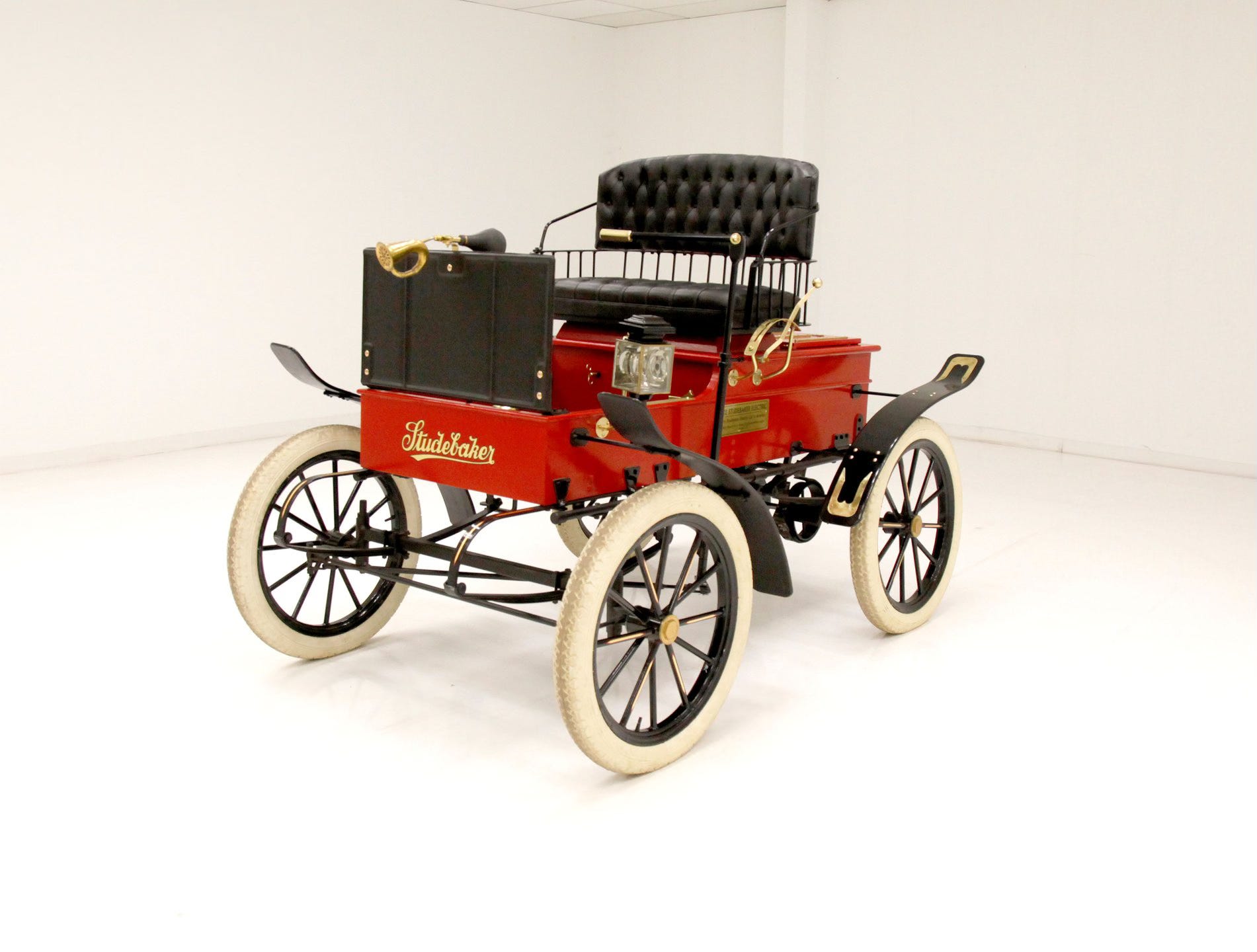
1902 Studebaker Electric
In “Studebaker - From 1852 to Commander Ron - Part One”, we traced the founding of Studebaker as a manufacturer of the renowned Conestoga and other wagons from the arrival in Pennsylvania of the Stutenbecker family from Germany in 1736 to the establishment of H & C Studebaker Wagon Builders in South Bend, Indiana in 1852. That post brought us up to 1902 when Studebaker introduced its first automobile, an electric car.
As early automobiles were little more than motorized wagons it was natural for a wagon builder like Studebaker to extend their wheeled offerings by adding motor powered vehicles. It seems odd, then, that of the wagon builders who did this only Studebaker successfully transitioned from horse-drawn wagons to horsepower-producing motors driving the wagons long term. Most of the other wagon builders who attempted to transition had closed before World War One. Only Studebaker continued through World War One and beyond the Depression and well into the post World War II years.
Studebaker had built a large factory in South Bend to produce its wagons. In the 1890s some 1,000 people were working there.
Around 1897 Studebaker was building and experimenting with “horseless carriages”. In July of that year, Studebaker employees, from District Managers to Branch Service representatives, actively discussed how the company would build a motorized carriage for commercial sale. Two electric prototypes were built, one using an Edison battery, the other using a Westinghouse battery. When production began, these electrified Studebaker wagons had Westinghouse (and later, Exide) batteries under the front seat rather than Edison’s. Whether using a Westinghouse or Exide battery, the Studebaker Electrics used Westinghouse motors.
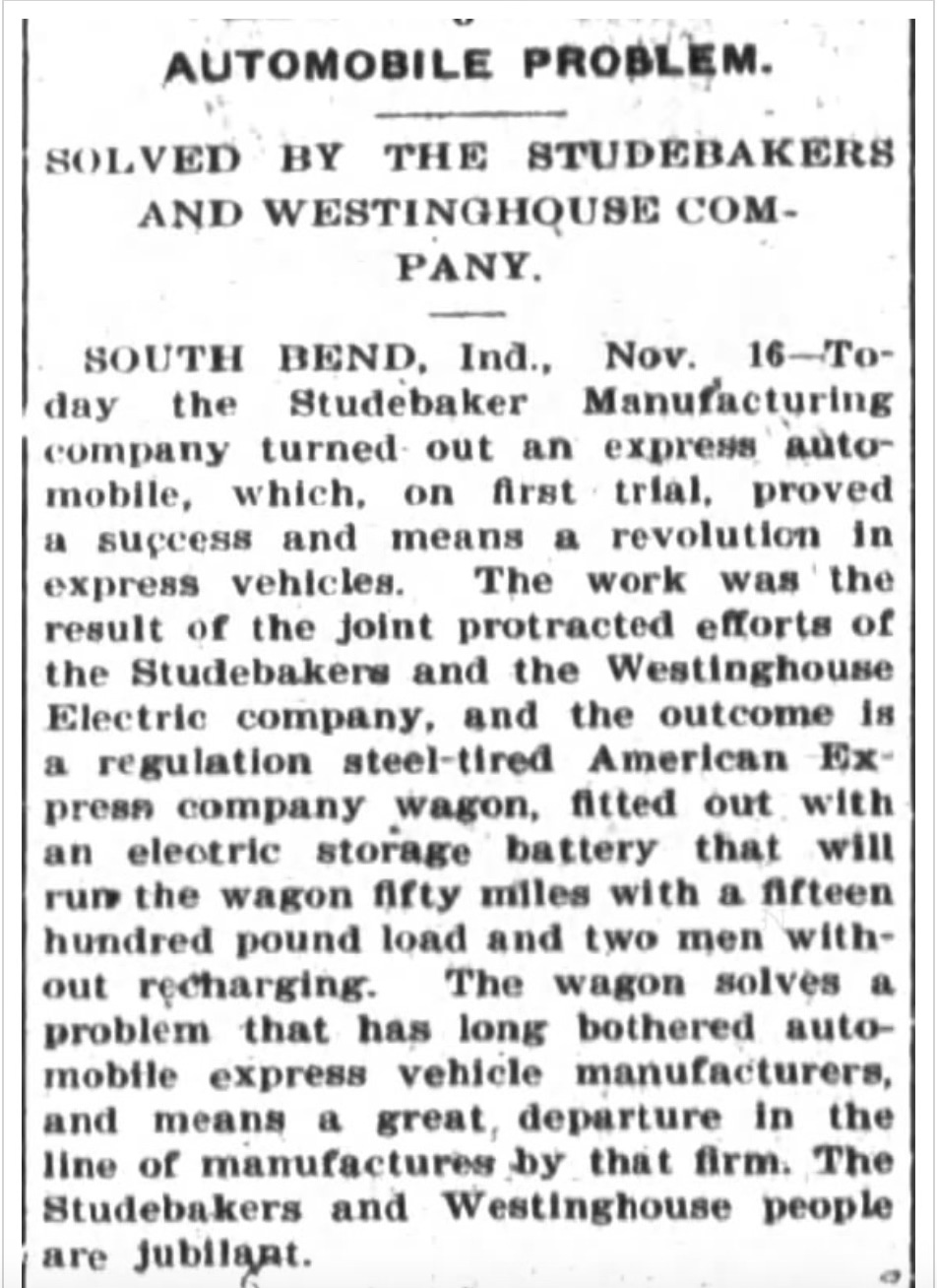
There is an interesting side note to Studebaker’s choice of Westinghouse rather than Edison batteries. The development of the Westinghouse battery for the Studebaker was overseen by Hiram Maxim, Nikola Tesla’s financial backer in the “electric current wars” of the 1890s. Maxim was Edison’s bitter corporate rival.
The Westinghouse battery for Studebaker would run the vehicle fifty miles without charging while carrying a 1,500 pound load and two passengers. The Westinghouse-powered Studebaker Electric prototype was tested successfully on 16 November 1901.
Despite Studebaker choosing Westinghouse over Edison batteries, relations between Studebaker and Edison were cordial. John Mohler Studebaker drove Edison around the track on the top of the Administration Building in South Bend in a Studebaker Electric and later A.R. Erskine, the third president of Studebaker, drove Edison in a Studebaker Electric.
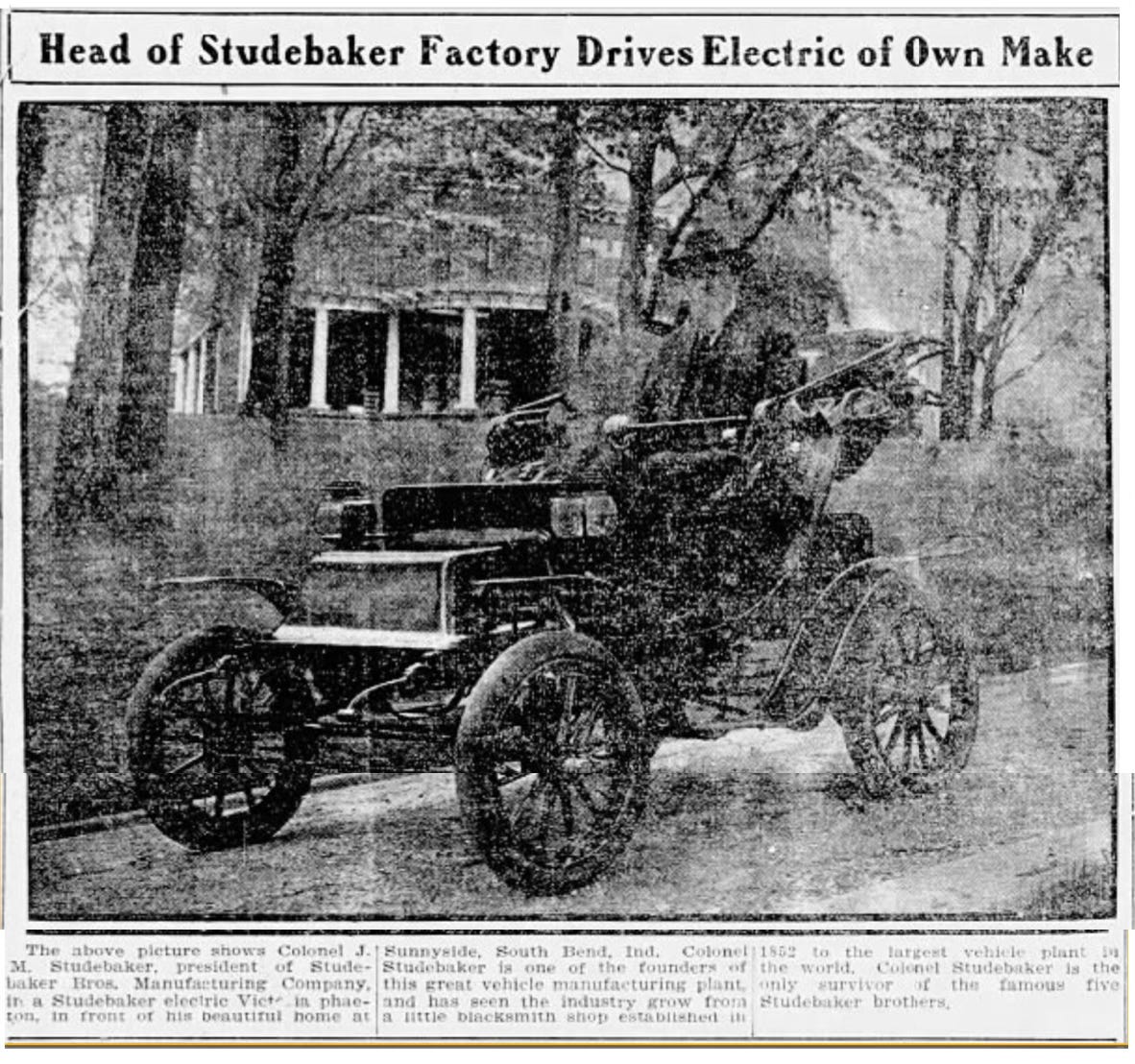
(Above) John Mohler Studebaker driving a Studebaker Electric in front of the Studebaker mansion in South Bend.
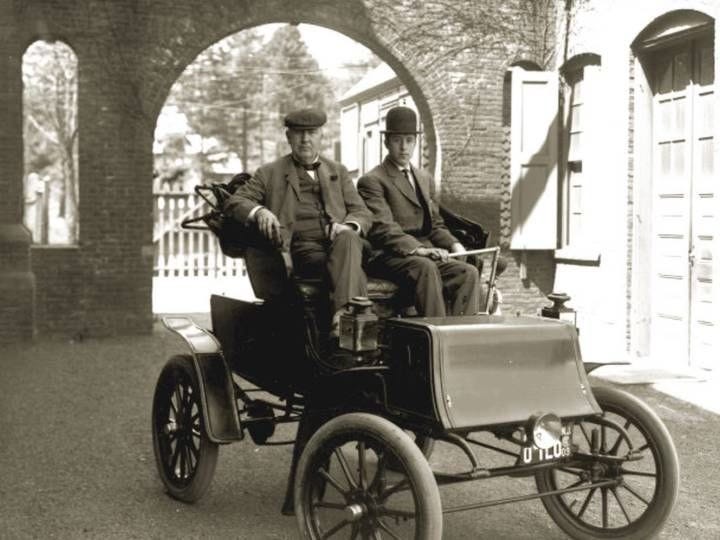
Studebaker president A.R. Erskine (left) drives Thomas Edison in a Studebaker Electric.
Electric Studebaker cars, powered by the Westinghouse battery, went into regular production in 1902. The first was sold to F. W. Blees of Macon, MO, who purchased it at the Texas State Fair that Fall. He kept his Studebaker Electric for at least ten years - he drove it at “Studebaker Day” at the Georgia State Fair in 1912. Obviously this Missouri (and later, Georgia) resident got around, remarkable considering the available communications and travel options of the time - a Missouri resident buying his Studebaker at the Texas State Fair and ten years later driving it on Studebaker Day in Georgia! Blees operated a successful carriage sales business, so his interest in horseless carriages was natural. In the inaugural year for Studebaker Electrics, the company sold 20 units.
The South Bend company did not rely solely on electric cars as automobiles gained acceptance over horse-drawn carriages and wagons. Studebaker began series production of gasoline-powered cars in 1904.
Studebaker wisely chose its market for its electric cars, focusing on city businessmen, and especially society women, as the premier customers for electric cars. While gas-powered cars became the company’s focus by 1912, Studebaker’s innovative designs and skillful presentation nevertheless made their electric cars more than a mere fad. They showed the country that electric cars could be made cost-effectively and provide customers with a reliable, affordable means of personal transportation.
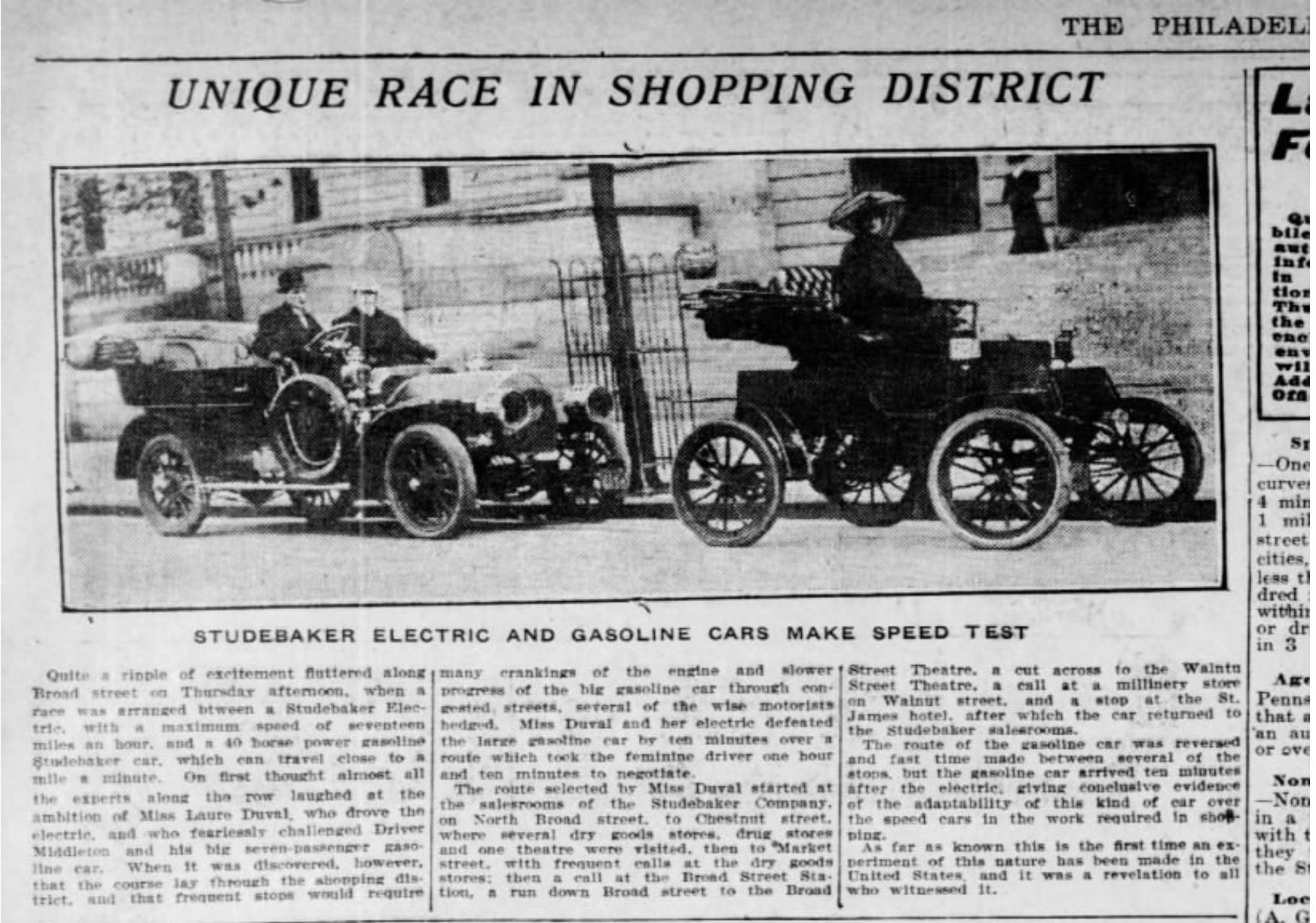
The marketing efforts toward women led to a unique publicity effort in Philadelphia in October, 1908 when a 40 horsepower gasoline Studebaker 7 passenger car driven by Tod Middleton was pitted against a Studebaker Electric driven by Laure Duval. Miss Duval had the distinction of being the only woman in automobile sales at the time. She concentrated on Studebaker Electrics, working from the New York Studebaker sales office.
The rules of the gasoline vs. electric contest were simple: each driver had to make twenty-five trips within Philadelphia’s shopping district, parking and shutting off their car each time they reached a destination. They would then restart their vehicle and travel to the next place on their itinerary. Some of the stops included Department Stores, theaters, a railway station, hotel, hairdresser and candy store. The gasoline car had to be hand cranked to start again after each stop - electric starters had not become available in 1908. The Studebaker Electric car, in contrast, was off and running immediately. Miss Duval completed her course a full ten minutes faster than Middleton driving his gasoline Studebaker.
Studebaker was wise in their decision to offer both gasoline and electric cars in the early days of the advent of the automobile. The advantages of the gasoline-fueled cars were not then as apparent as they later came to be and electrics had short-trip advantages in city driving. Studebaker further covered its bets by continuing to manufacture horse-drawn wagons. If it had wheels, Studebaker built it!
In Part Three we will see Studebaker complete its evolution into the production of gasoline powered vehicles only.
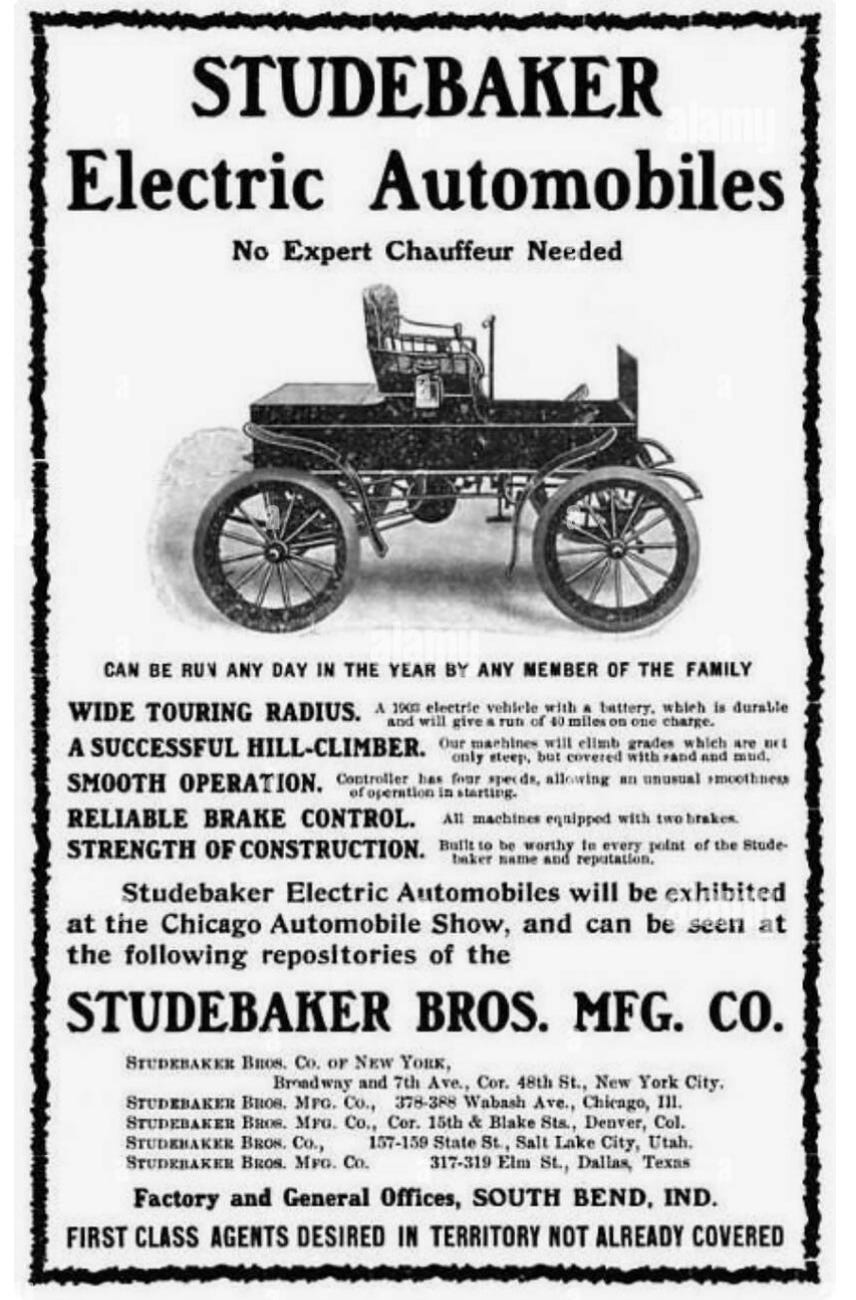
A little better looking design than the currant Tesla's.